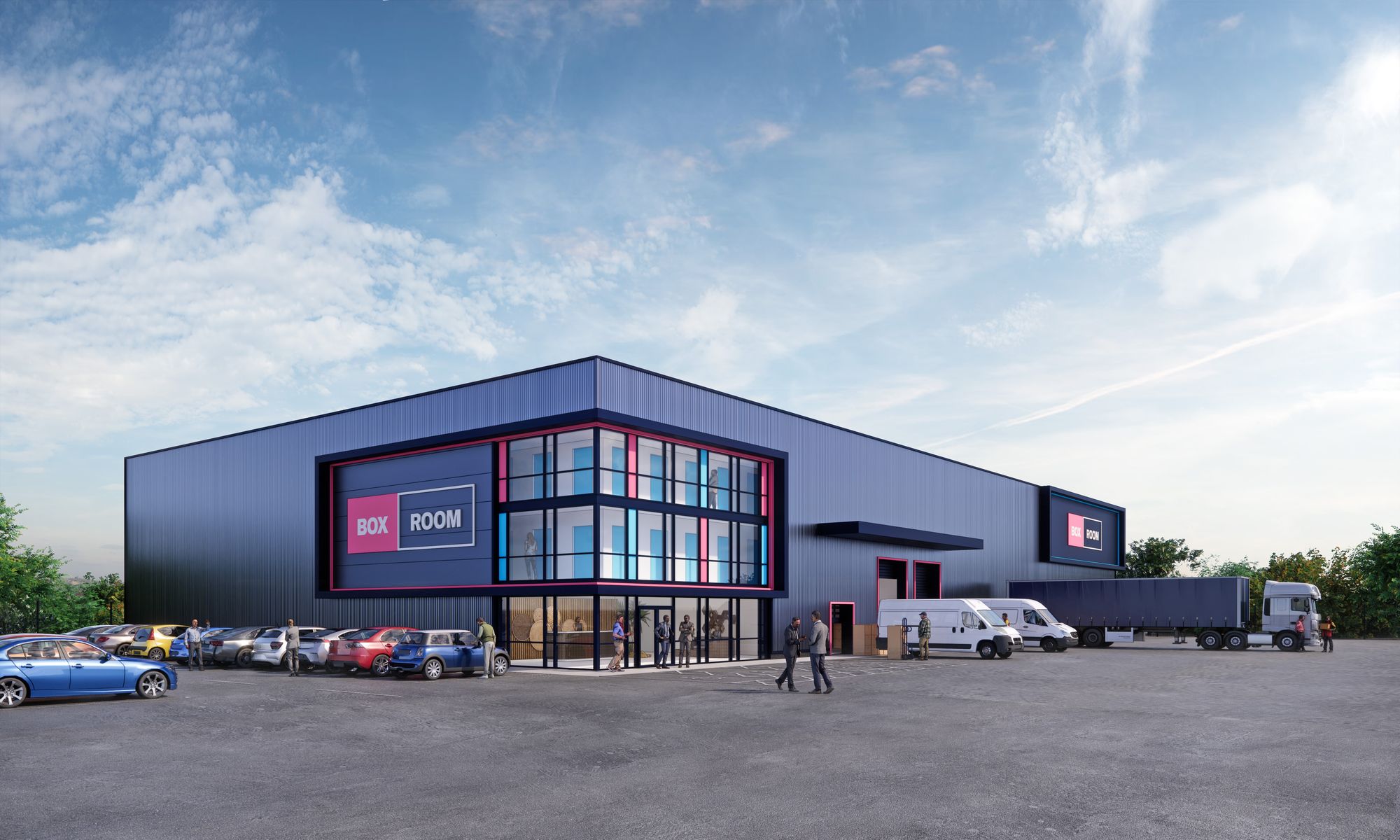
Yeats has published a full 10-year review of the UK self-storage sector — the research base behind Boxroom, the Yeats self-storage operating brand. This article summarises the argument; the full 32-slide review is at thesis.boxroom.app.
A market operating at a fraction of its benchmark
The UK operates at roughly 0.82 sq ft of storage space per person, against 5.8 sq ft in the United States — a sevenfold penetration gap. Full convergence is not the argument: a move to just 1.2–1.5 sq ft per person over a decade — still under a quarter of US penetration — would represent a material increase in absorption, delivered at UK rents that run two to three times US levels.
Demand is demographic, not cyclical
UK new-build homes average around 800–900 sq ft, typically without basements or garages, and average room sizes have declined for decades. Long-term renting delays household formation and increases mobility — and moving is the number-one storage trigger. Life-event demand — death, divorce, downsizing, dislocation — generates consistent churn that held up through both the financial crisis and the pandemic. Business users are the fastest-growing segment, with SMEs using units as micro-logistics and fulfilment space.
Institutional capital is arriving
The sector recorded £1.3bn of UK industry turnover in 2026 — a record — across roughly 2,500 facilities and 64.3m sq ft of floorspace, up 7.2% year on year. US institutional capital, including net-lease REITs, is entering the UK market. The pattern resembles the US in the mid-1990s, when institutional entry preceded the sector's largest development phase — with one structural difference: UK planning constrains the competing supply that repeatedly oversupplied US metros.
Europe confirms the curve
European markets appear to follow the same adoption curve at their own lag. The UK leads the continent and holds roughly 35% of European revenue — the deepest, most liquid market — in a European sector forecast to grow from €27bn to €33bn by 2030.
How Yeats plays it
The Boxroom playbook follows directly: conversions of secondary commercial buildings in supply-constrained urban catchments, underwritten backwards from achievable rents, with utilisation modelled conservatively. The flagship conversion of the former Saga headquarters at Westwood Cross, Broadstairs is in delivery, with Borehamwood in advanced planning and Bristol Cribbs Causeway in appraisal.
Sources for the figures above include SSA UK, Cushman & Wakefield and Savills research; the full review sets out each source alongside the relevant analysis.